Brought to you by Andreas Wieland, Christiane Lehrer, Attila Márton from Copenhagen Business School
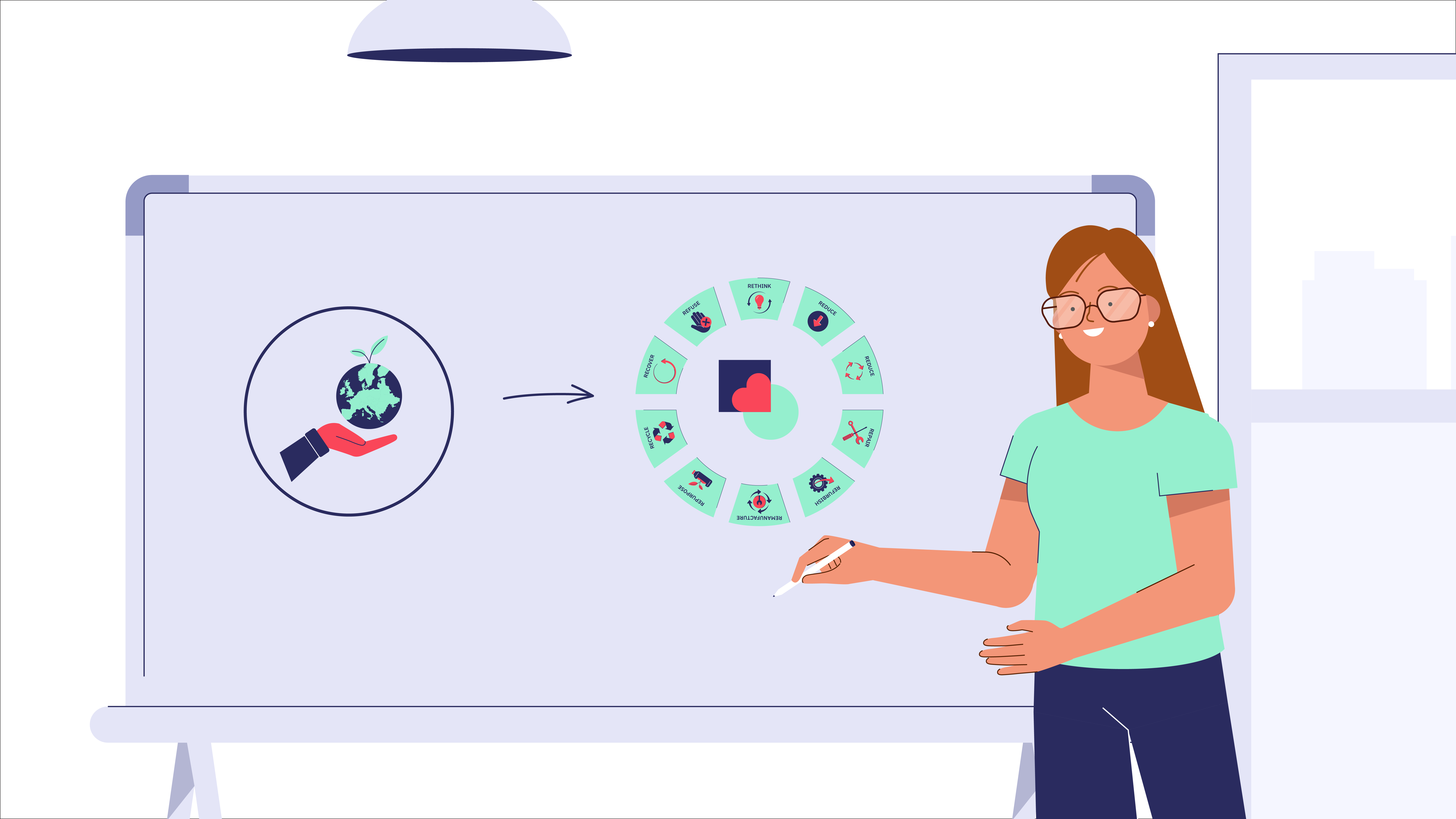
We have made the observation that the circular economy is often misunderstood as simply a sophisticated approach to recycling. This perception limits its fantastic potential and leads organisations to underestimate the scope and scale of true circular innovation. At its core, the circular economy is not about recycling – it is about reimagining entire business models.
Take-make-waste model
Traditionally, our economic system has been linear: resources are extracted, parts, modules, and goods are manufactured, consumers buy and use these goods, and then they are discarded. This take-make-dispose model has proven unsustainable in an era defined by climate and biodiversity crises and planetary boundaries. The transition to circularity offers a promising alternative by radically redefining how products are created, used, and reused.
Recycling
Recycling, while important, can be seen as the weakest and most value-destroying loop in a truly circular model. It implies breaking down products to their raw materials – a process that typically involves significant losses of energy and resources, thereby reducing overall value. In contrast, truly circular business models emphasize preserving value through product longevity, reuse, refurbishment, and remanufacturing.
Circular business models
A striking example is the automotive sector, which has traditionally relied on the continuous sale of new vehicles. Here, circular business models propose a shift from ownership to shared use. Instead of consumers buying vehicles that sit idle 90% or more of the time, sharing models optimize vehicle use, reduce the total number of cars needed, and fundamentally change incentives for manufacturers. Car companies are already considering subscription-based or pay-per-use car models. They now have clear incentives to produce durable, easily maintained vehicles, rather than maintaining short product life cycles to encourage frequent repurchases.
Such business models have profound implications for corporate strategy and product design. When products are owned by the company and revenue is derived from ongoing service delivery rather than sales, companies prioritise durability, ease of repair, and modular design. This approach keeps resources in the economic cycle for as long as possible, in sharp contrast to the built-in obsolescence of the traditional linear model.
The environmental benefits of true circularity are clear. By decoupling economic activity from the consumption of finite resources, circular business models significantly reduce resource extraction, waste generation and emissions. They help address contemporary sustainability challenges by reducing pressure on planetary boundaries.
Challenges
However, realising these benefits requires overcoming entrenched barriers. Many organisations remain wedded to their legacy systems and are reluctant to embrace new business logics. Often, executives misinterpret circularity as simply an advanced form of recycling, missing its full potential.
To achieve true circularity, leaders must embrace radical innovation and think beyond recycling and incremental improvements. Companies must adopt strategic frameworks that guide systemic change in their business models, operations, and stakeholder relationships.
The circular economy represents a promising departure from traditional business logic, offering not only an innovative path to sustainability, but also immense opportunities for economic growth and resilience. Transitioning toward circularity means recognising recycling as a small piece of a much larger puzzle, and instead shifting the focus to new business paradigms that fundamentally reshape the way companies create and capture value.