Brought to you by Marion Junique, Assistant Project Manager Sustainability and DiCE, Johnson & Johnson
As we wrap up the third year of DiCE, we are excited to share the progress to make digital health devices more circular. Our work brings together researchers, manufacturers, hospitals, citizens and waste handlers to rethink how these devices are designed, used, and could be reused – all with the goal of reducing electronic waste and protecting the environment.
Exploring Business Models and Policies
To make circular healthcare a reality, we need strong business models and supportive policies. This year, we ran surveys and workshops to test new ideas, and spoke with doctors, nurses, manufacturers, and regulators to understand the barriers they face.
We also contributed to a European consultation on the Medical Devices Regulation (MDR, 2017) and created a glossary of terms and definitions to help everyone speak the same language when it comes to circular healthcare.
Improving Recycling and Reuse
A local reprocessing pilot at Radboud University Medical Centre hospital (The Netherlands) helped us identify key challenges in collecting and sorting used electrocardiogram (ECG) lead sets. Interviews with stakeholders at the University Hospital Leuven (Belgium) gave us valuable insights into how they already conduct local reprocessing practices.
We also held a round table with University of California Los Angeles hospital (USA) to learn more about specialised reprocessing practices.
Recycling baselines were established for four of our use cases (the endocutter, smart pillbox, ECG lead sets, and On Body Drug Delivery System), along with an assessment of critical raw materials to identify opportunities and challenges.
Measuring Impact
We completed a full mapping of value chains for DiCE use cases. A literature review helped us identify relevant circular indicators for digital health devices, and we defined relevant social impact categories.
A major milestone was the publication of a scientific article reviewing how the environmental impact of electronic healthcare devices is currently assessed and how it can be improved.
We also began developing a dashboard to help policymakers visualise the transition to a circular economy in healthcare and support better decision-making.
Engaging Citizens and Influencing Behaviours
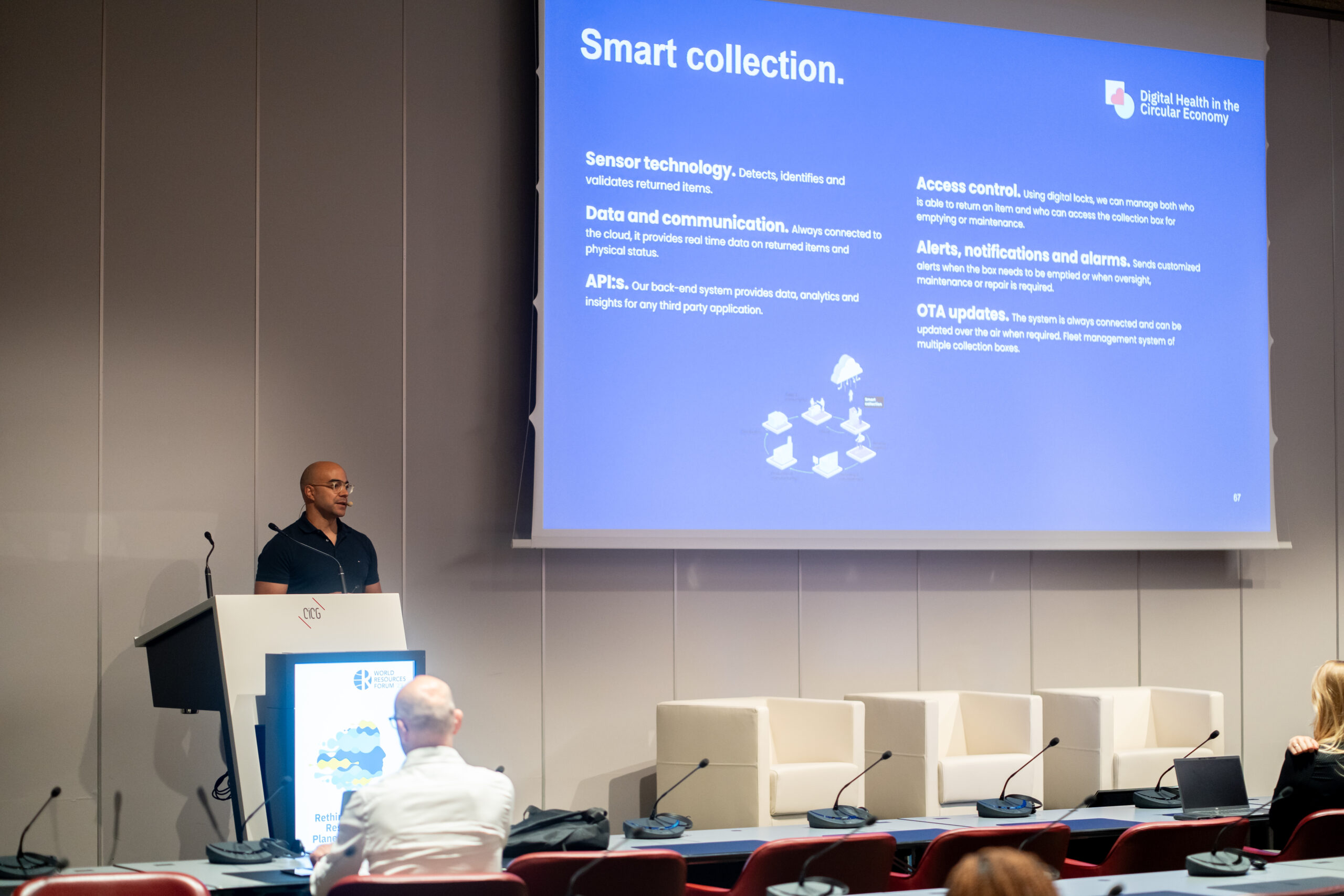
Circular healthcare needs everyone’s involvement, including patients and citizens. This year, we designed strategies to stimulate people to return used devices and installed 25 smart collection boxes in Belgium, Slovenia and Spain as part of our pilot activities.
We also began preparing for a new pilot focused on the collection of the On Body Drug Delivery Systems (OBDDS) in Belgium and started recruiting participants.
Connecting and Sharing Ideas
This year, we joined forces with two other EU-funded projects and co-organized events:
- CE-RISE: A webinar exploring how an ideal information sharing system to support digital product passport could look like for the healthcare sector.
- INCREACE: A session focused on regulations and policy on electronic waste and plastics, with a focus on the healthcare sector.
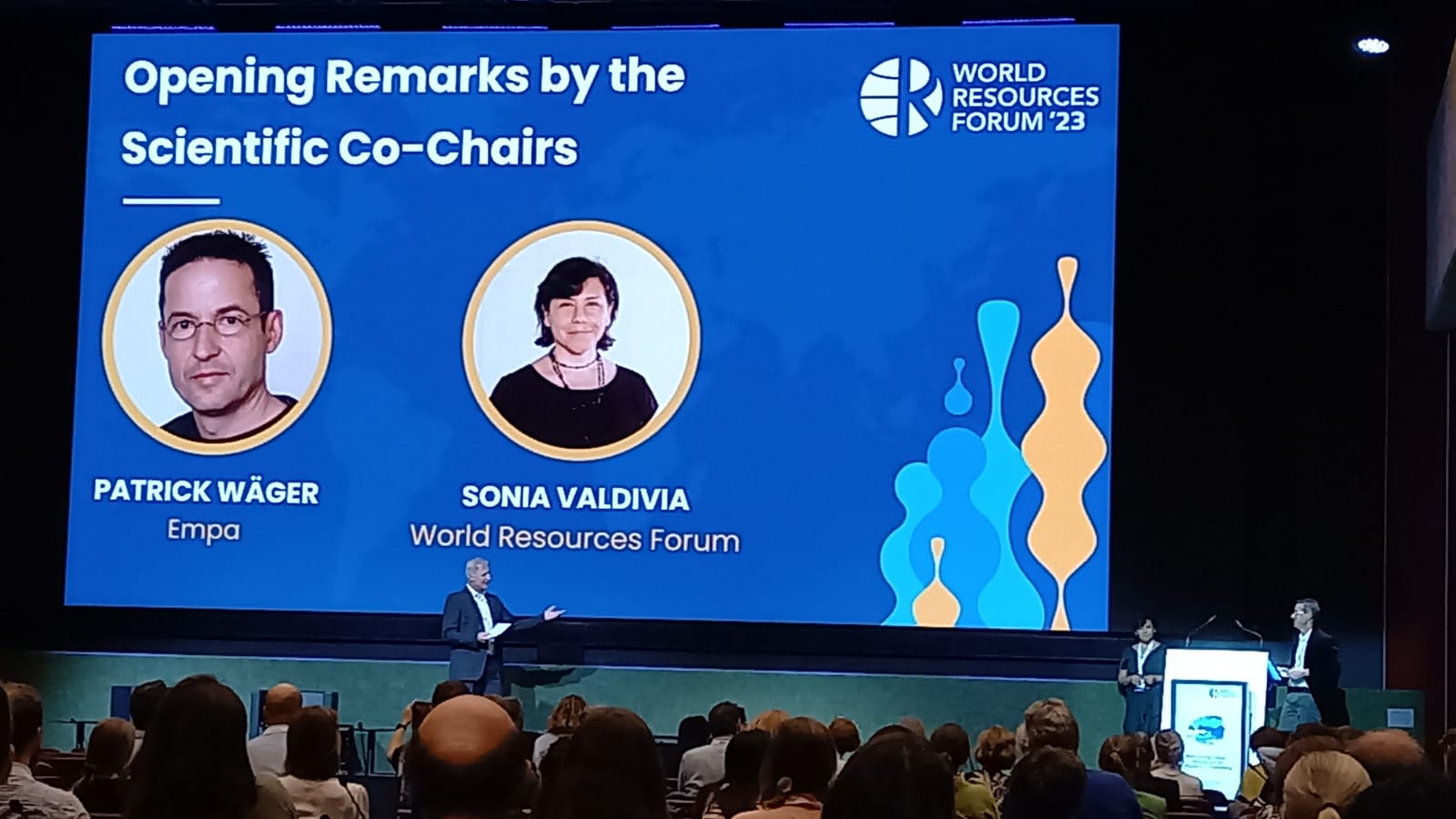
We also held our DiCE annual event at the 6th Nordic Conference on Sustainable Healthcare in 2024, where we led a session on how to build a sustainable healthcare ecosystem and at Philips Headquarters in 2025 with more than 40 participants in person and 34 online.
A warm welcome goes to Jakob Pruess from Takeda, who joined our Advisory Board. And to help explain our mission, we launched a short animation introducing DiCE.
Rethinking Medical Device Design
We developed four new design concepts for laparoscopic surgical tools and worked on redesigning a medical sensor.
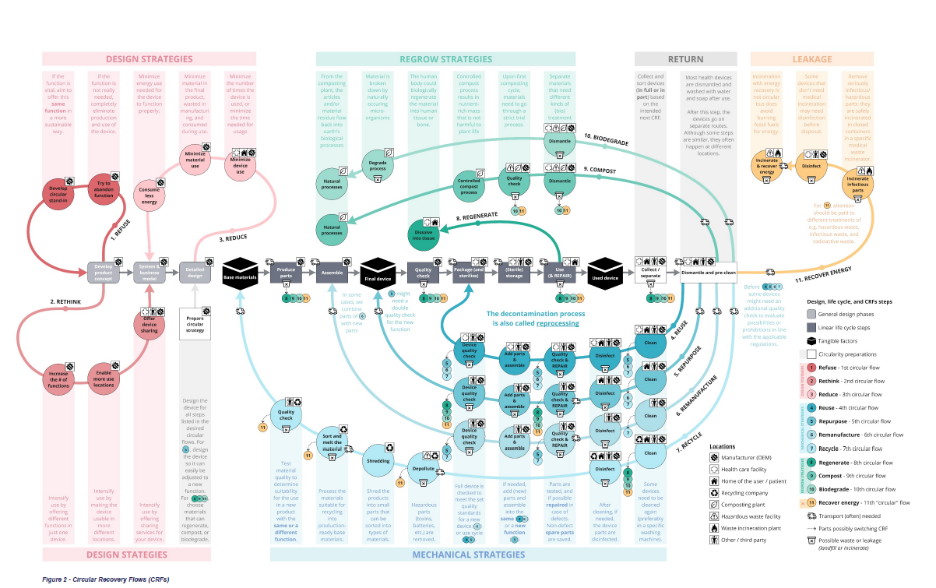
We also refined our circular recovery flows hierarchy, which shows options on how materials can be recovered and reused in healthcare. This updated version will be publicly released in the coming months.
In parallel, we began drafting the Circular Design Guide, a practical resource to help others design more environmentally sustainable medical devices.
Looking Ahead
Year three has been full of collaboration, creativity, and learning. As we enter the final phase of DiCE, we are more motivated than ever to build a future where digital health is not only innovative, but also considering circularity and the environment.
In our final year, we will continue developing training materials and the Circular Design Guide, conducting pilots for stronger evidence, enhancing the dashboard, shaping policy recommendations, and creating a roadmap for implementing circular business models in practice – and much more!
Stay tuned for more updates and thank you for being part of the journey!