European pilot tests in Geel (Belgium), Valladolid (Spain), and Maribor (Slovenia) involving 414 participants show that over 60% of citizens are likely to responsibly dispose of their end-of-life devices using different collection methods.
From smart pillboxes to wearable sensors, digital health technologies are becoming part of everyday life. Yet once these devices are no longer used, they often end up forgotten in drawers or discarded as residual waste. European Union-funded research project, DiCE (Digital Health in the Circular Economy), is exploring how these devices can be kept in the loop by employing sustainable practices such as reuse, refurbishment and recycling.
To better understand how citizens deal with digital health devices after use, DiCE organised a large-scale pilot across three European cities in Belgium, Spain and Slovenia. The pilot results show that citizens are not only willing to return small digital health devices, but that the way return systems are organised matters. The results confirm that convenience, proximity and integration into everyday routines are critical for making circular return behaviour easy and realistic.
Starting with Citizens: Co-creating Solutions
The project began by asking a simple question: what would make people return digital health devices once they no longer need them?
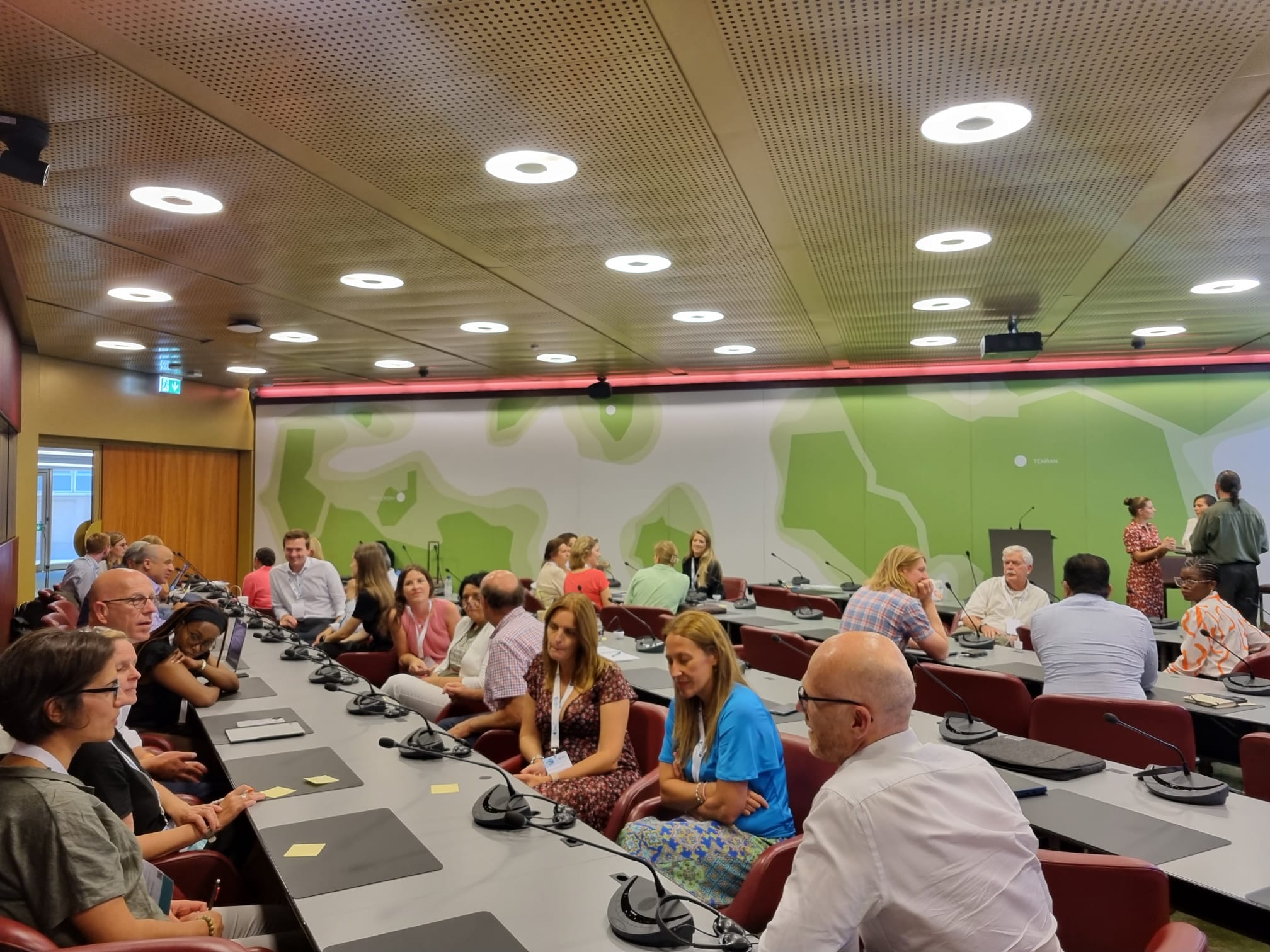
Across the three participating countries, LiCalab (Thomas More), MINDLab by Fundación INTRAS, and Regional Development Agency for Podravje – Maribor first invited citizens and local stakeholders to join numerous interactive sessions and interviews exploring everyday habits and barriers around electronic waste. In total, 228 participants of all ages discussed how they currently deal with unused electronic devices, which return systems they would find most convenient, and where collection points should ideally be located.
As expected, these workshops revealed a number of key insights. Citizens prefer simple and accessible return options, such as local drop-off points in places they regularly visit such as healthcare facilities, public buildings including libraries and everyday commercial locations like supermarkets, or the simple possibility of returning devices by post. Last but not least, consumer readiness to return electronic devices largely depends on convenience, trust, and access to clear information.
Based on these insights, the project designed two complementary return pathways to test over three months:
- Returning devices via free-of-charge postal services
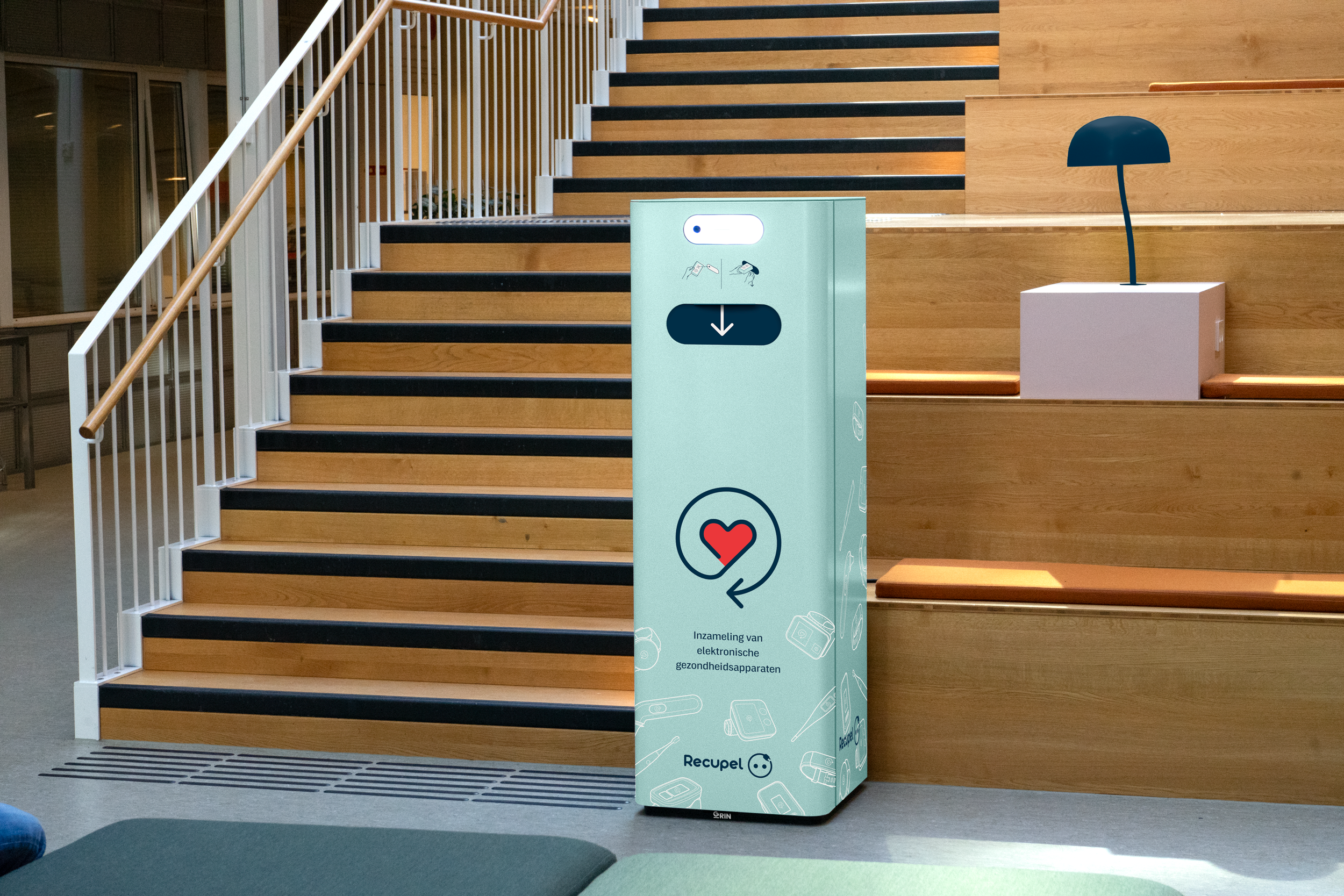
- Returning devices through local collection points equipped with smart collection machines
Testing Behavioural Strategies in Everyday Life
To understand how people behave after using digital health devices, project partners launched a large-scale pilot study involving over 130 citizens in each region. Every participant received three different electronic pillboxes and was asked to evaluate the usability and acceptability of the devices. However, unbeknownst to the participants, researchers were also interested in another crucial question: what happens when people are finished using the device?
To encourage device returns without explicitly asking participants to do so, behavioural designers from Games for Health came up with several motivational strategies. These subtle “nudges” promoting responsible behaviour took several forms: varied messages and visuals incorporated into the pillbox packaging and accompanying materials, as well as four distinct packaging designs, from a basic version up to a premium version. After the testing phase, participants could return the devices either through postal services or through smart collection machines installed across different collection points in the three cities.
Smart Collection Machines for Healthcare Devices
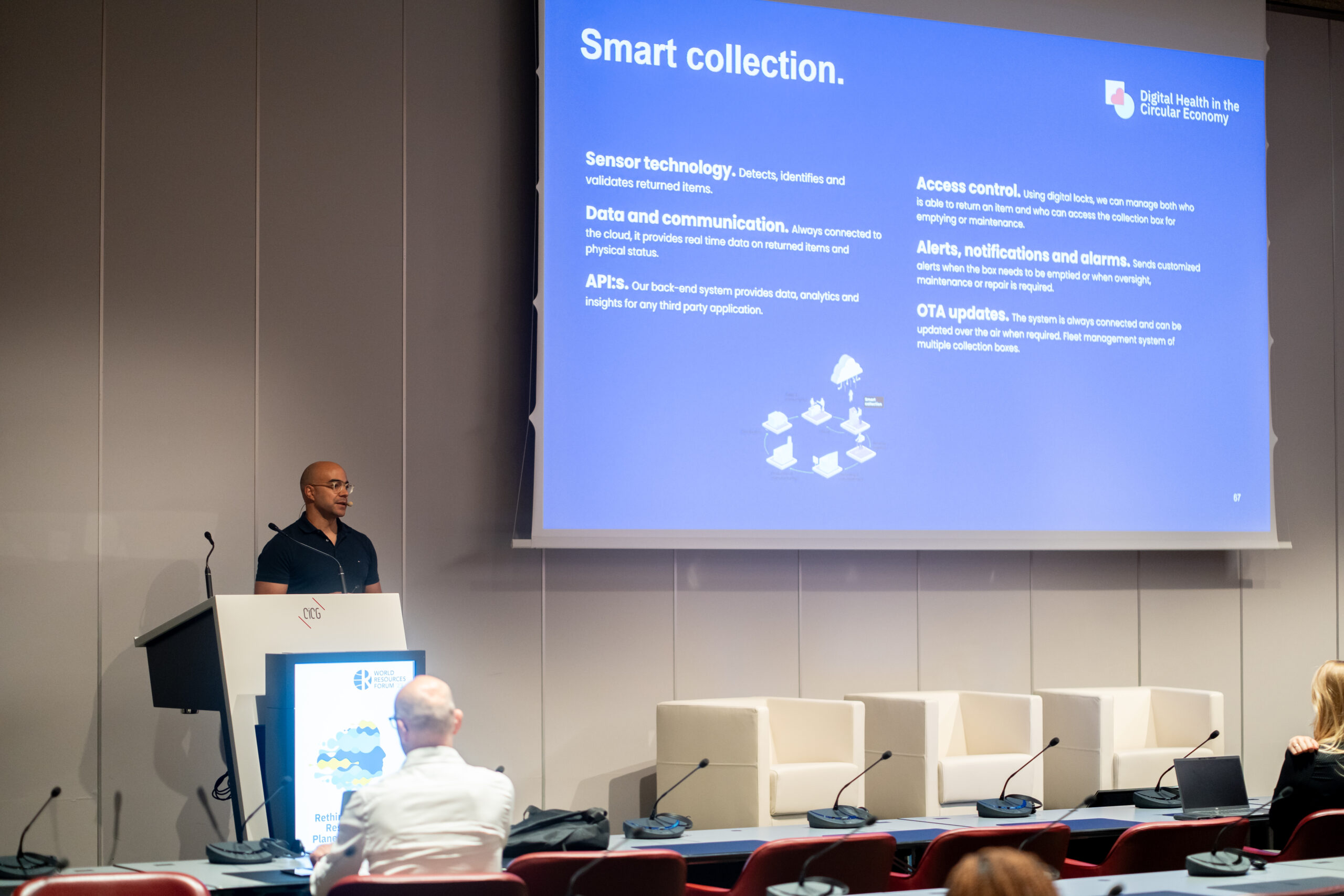
A total of 25 smart collection machines, designed in Norway by GRIN, were installed across the three participating European cities, allowing people easy access. The smart collection machines facilitated secure returns with real-time monitoring, ensuring that collected items remained safe from unauthorised access. Locked by default, they were simple to use: participants scanned the unique QR code on their device’s packaging, and the machine unlocked to accept the return. GRIN also provided real-time data on returned items and bin fill levels, which helped optimise collection and operations.
Locals not taking part in the pilot study were equally encouraged to return small digital health devices to the smart collection machines as the collection points were supported by a city-wide communication campaign organised by the municipality and the local Producer Responsibility Organisation (PRO).
The smart collection machines also generated evidence beyond the return of the pilot pillboxes. In total, the machines collected 320 pillboxes across the three regions: 127 in Spain, 61 in Slovenia and 132 in Belgium. They also attracted additional small electronic devices, especially in Spain and Belgium, where 35 and 34 extra electrical and electronic items were collected respectively, compared with 5 in Slovenia.
At the same time, the sorting exercise showed that users sometimes interpreted the collection points broadly: a limited number of inappropriate materials, such as medicines, batteries, and packaging were also deposited. This underlines the importance of clear communication about what can and cannot be returned.
Building a Circular Chain
Behind the scenes, these pilots also tested the operational side of circular healthcare systems. Local producer responsibility organisations, Recupel, ECOLEC and EKOSIJ, took care of the reverse logistics ensuring that returned devices were safely transported and processed.
Understanding that digital health devices may not only require safe handling but contain sensitive personal data, GRIN’s smart collection machines provide a secure and traceable return solution beyond the capabilities of traditional bins.
Early Lessons: Convenience and Clarity Drive Circular Behaviour
Initial observations from the pilots show encouraging results. Motivational strategies can help increase the likelihood of people returning digital health devices. At the same time, the pilots highlighted that behavioral nudges integrated in the packaging alone are not enough. For circular systems to work in practice, the entire chain must function smoothly: collection points must be easy to access, instructions must be clear, and reverse logistics must be well organised. This has been largely proved as participants across the three regions rated local collection points more positively when they were nearby, familiar and located in places they already visit, such as pharmacies, shops or public buildings.
“The pilots demonstrate that involving citizens from the start – through co-creation, testing and feedback – can help design circular systems that work in real life. It became clear that citizens are willing to participate in and engage with the design process, and have the potential to contribute with meaningful, smart solutions.” says Sascha Vermeylen from Thomas More University, the coordinator of the pilots.